At the Threshold of Matter
Beneath the earth, a machine of almost incomprehensible scale
was built to ask an ancient question:
What is matter made of?
The Question Beneath the Earth
What is matter made of?
The Science of the Invisible
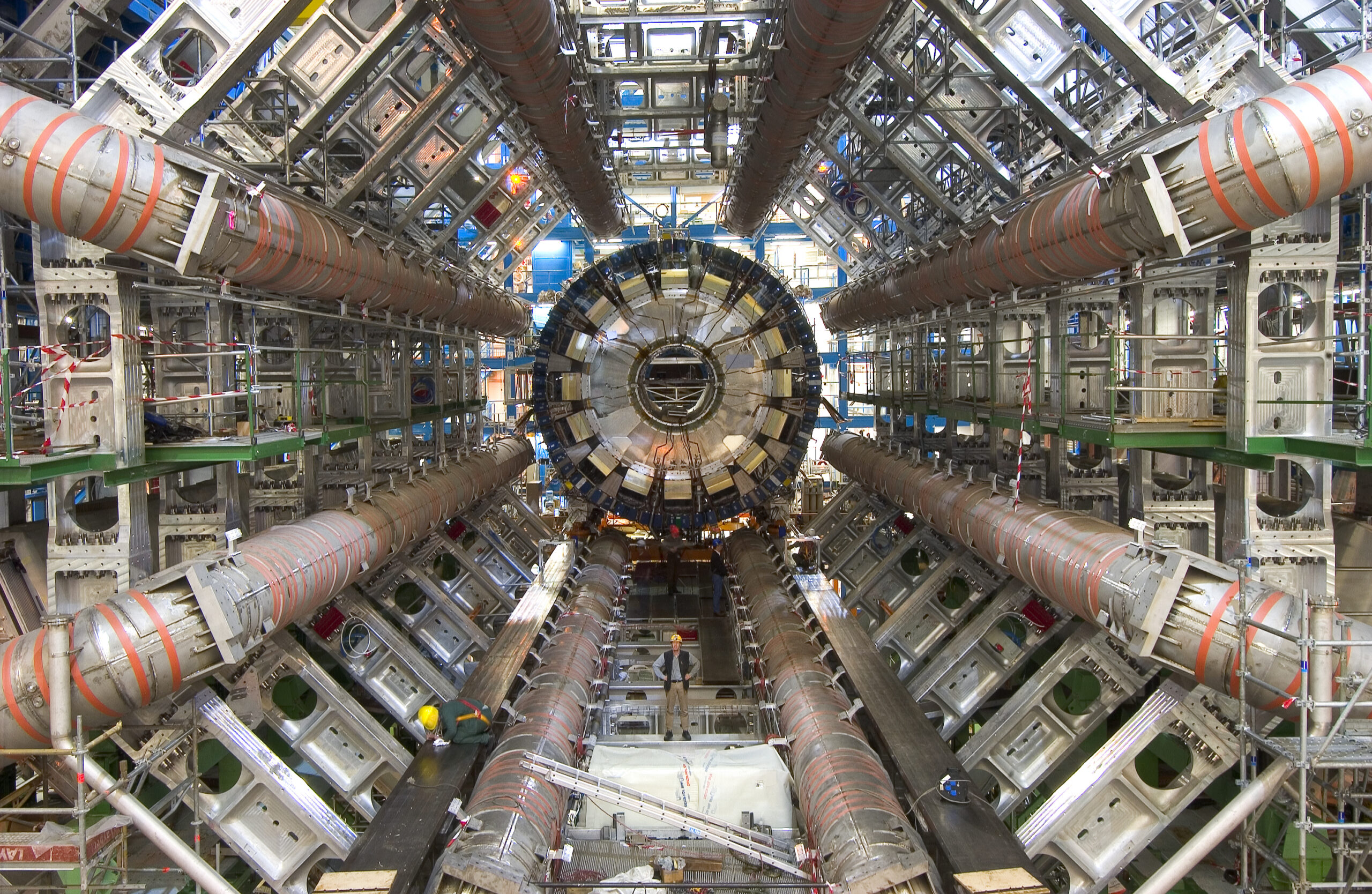
At CERN, the European laboratory for particle physics near Geneva, the Large Hadron Collider accelerates particles to nearly the speed of light, bringing them into collision to investigate the fundamental nature of matter and the forces that govern it.
Miles of machinery, an immense architecture devoted to investigating the imperceptibly small.
The Threshold
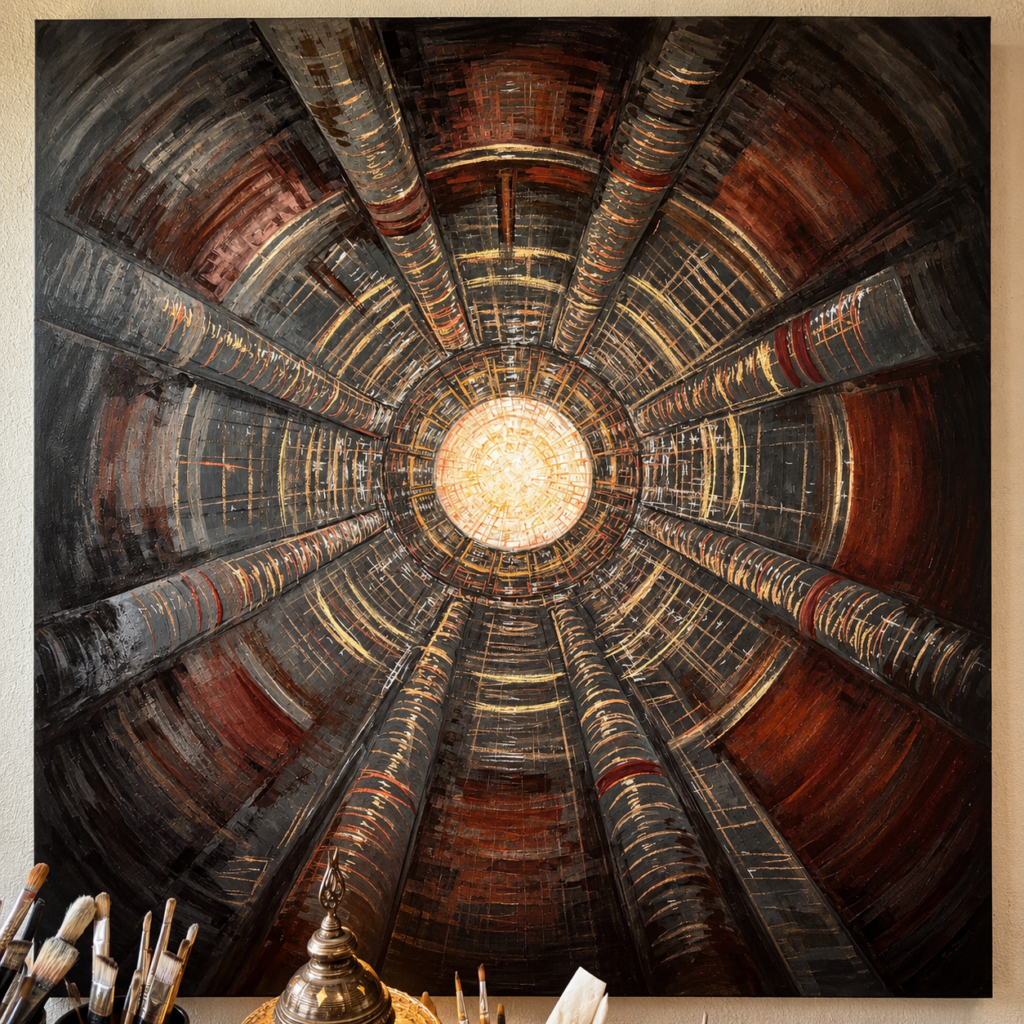
The machine occupies a peculiar boundary in human inquiry. It does not merely observe nature from a distance; it creates the extraordinary conditions through which nature reveals something of its hidden structure.
In the painting, that boundary becomes architectural. The collider is drawn toward a luminous center, transformed from scientific instrument into threshold: a portrait of the machine, and of the human desire to see beyond the apparent solidity of the world.
The Mythology of the Unknown
Human beings have always mythologized what lies at the boundary of understanding.
Mountains became the dwelling places of gods. The heavens became cosmologies. Forests, storms, eclipses and stars accumulated spirits, omens and divine intention.
Our machines have now become large enough, powerful enough, and mysterious enough to inherit some of the same projections.
Around CERN, contemporary mythology spreads like wildfire across social media: wormholes and portals to other dimensions, altered timelines, disturbances in Earth’s electromagnetic field, time accelerating or slowing, hidden dimensions, simulated realities, and the Mandela Effect, where shared memories of a different past become entangled with theories of shifting realities.
The impulse to mythologize remains ancient, but its imaginative territory now reaches beyond the dwelling places of gods into the mysteries of time, matter, consciousness, and entire universes.
The Painted Work
An opportunity to reserve the original painting before its completion. Acquisition details are arranged privately.
Acquire →